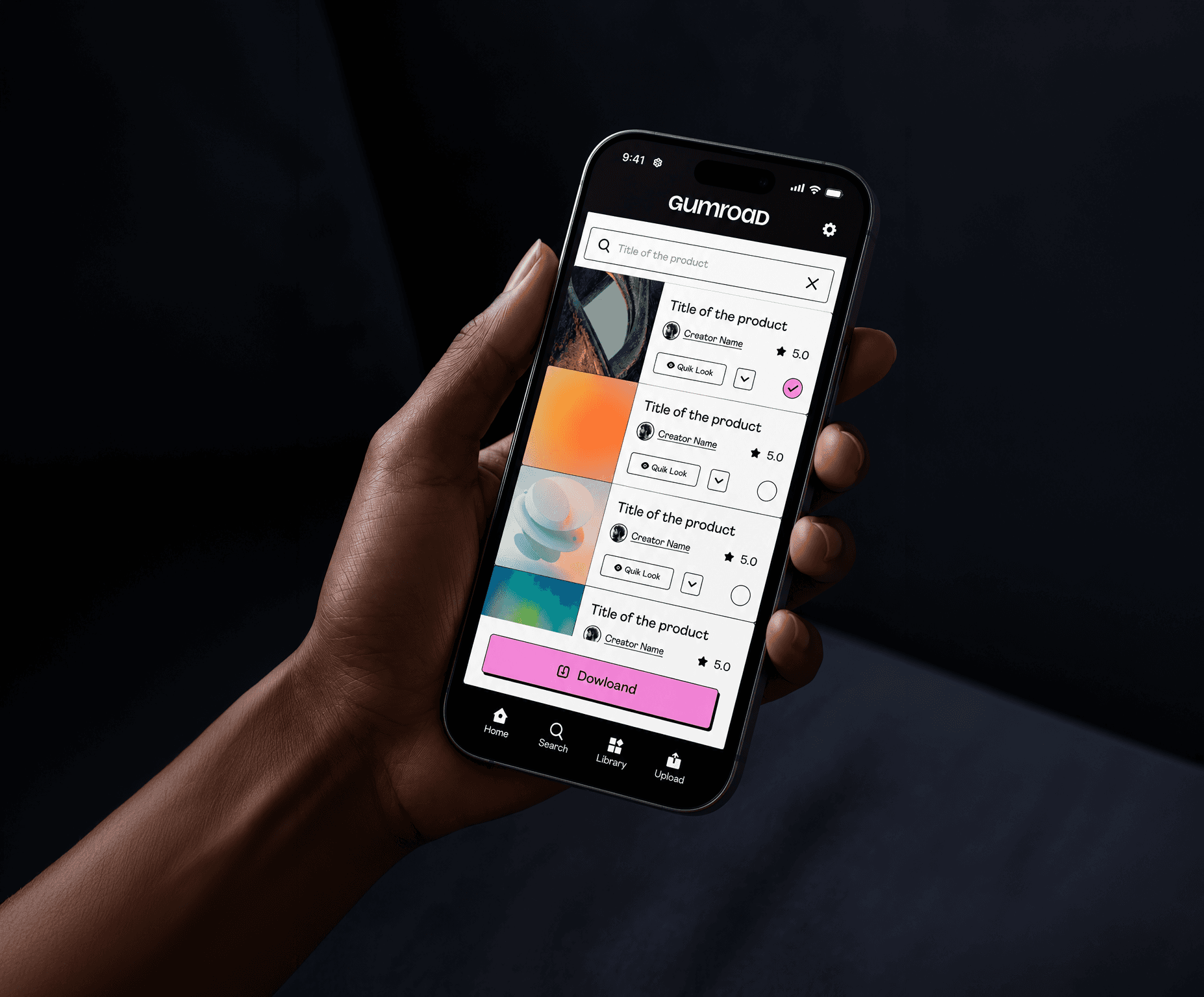
Unloop Music Discovery App

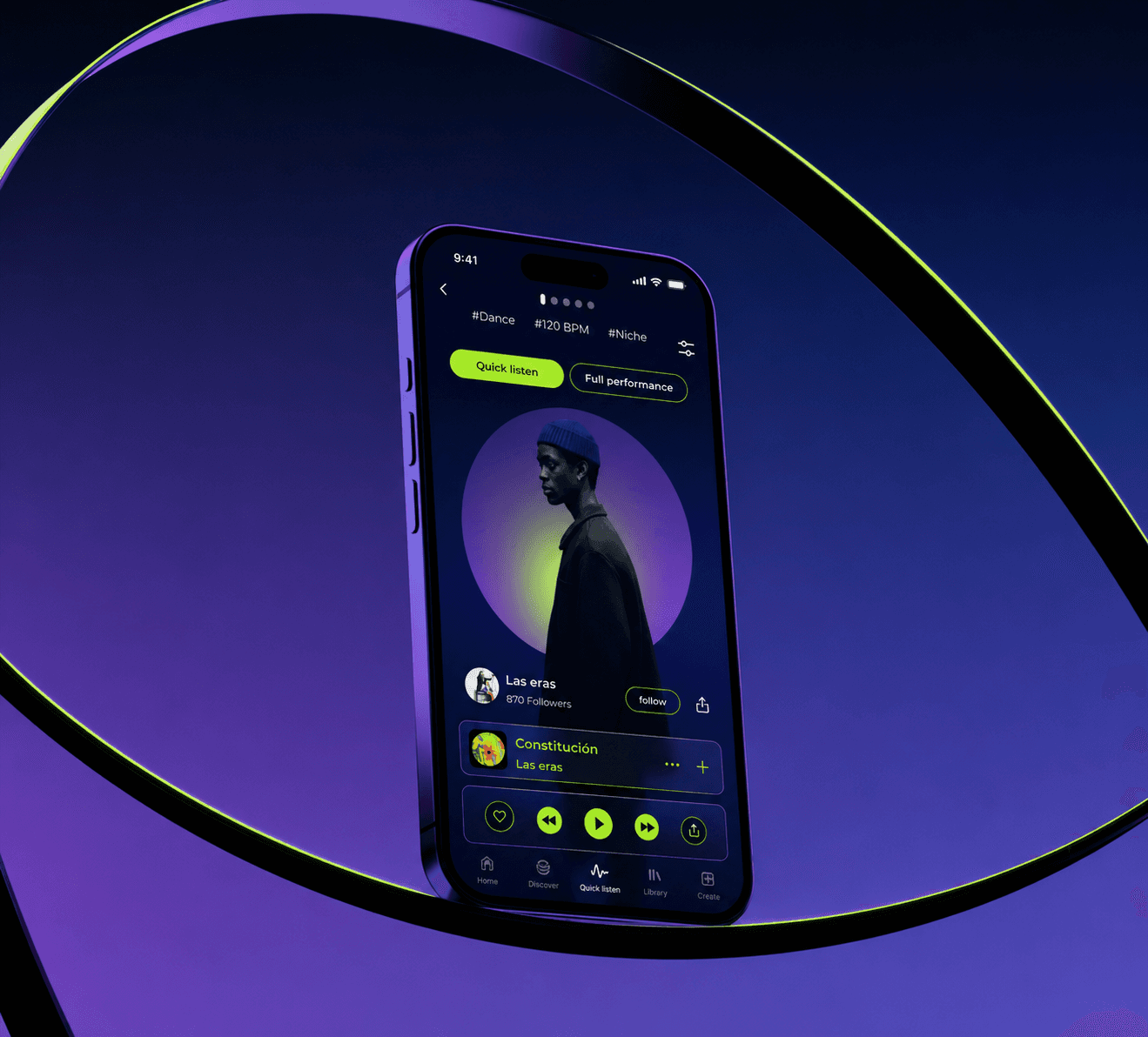
Unloop is a mobile app concept that puts music discovery back in the hands of the listener. Designed in two weeks as an original concept, it directly challenges the algorithmic loop that traps active music seekers on every major streaming platform.

00
research

Streaming platforms are built for retention, not discovery. The more you listen, the narrower the algorithm gets. Active music seekers have no tool designed for them every platform offers more of the same. Three layers: secondary research across six academic sources, an 18-question survey with 23 responses, and six in-depth user interviews all targeting one question: why do active listeners still feel stuck?

Streaming platforms are built for retention, not discovery. The more you listen, the narrower the algorithm gets. Active music seekers have no tool designed for them every platform offers more of the same. Three layers: secondary research across six academic sources, an 18-question survey with 23 responses, and six in-depth user interviews all targeting one question: why do active listeners still feel stuck?

Streaming platforms are built for retention, not discovery. The more you listen, the narrower the algorithm gets. Active music seekers have no tool designed for them every platform offers more of the same. Three layers: secondary research across six academic sources, an 18-question survey with 23 responses, and six in-depth user interviews all targeting one question: why do active listeners still feel stuck?

key insights

Across all six interviews and 23 survey responses, one pattern emerged with striking consistency: users do not lack access to music. They lack control over how they find it. Recommendations arrive without explanation. More than 50% of users do not understand why content is being suggested to them. When a suggestion misses, 90% ignore it and move on, never telling the platform why. The algorithm learns nothing. The loop tightens. More than half of users don't understand why content is being suggested to them, creating distrust and reducing engagement. When recommendations miss the mark, 90% of users simply ignore them rather than provide feedback, leaving platforms with little information to improve future suggestions. The result is a self-reinforcing cycle: users don't understand recommendations, platforms don't understand users, and discovery quality stagnates.

Across all six interviews and 23 survey responses, one pattern emerged with striking consistency: users do not lack access to music. They lack control over how they find it. Recommendations arrive without explanation. More than 50% of users do not understand why content is being suggested to them. When a suggestion misses, 90% ignore it and move on, never telling the platform why. The algorithm learns nothing. The loop tightens. More than half of users don't understand why content is being suggested to them, creating distrust and reducing engagement. When recommendations miss the mark, 90% of users simply ignore them rather than provide feedback, leaving platforms with little information to improve future suggestions. The result is a self-reinforcing cycle: users don't understand recommendations, platforms don't understand users, and discovery quality stagnates.

Across all six interviews and 23 survey responses, one pattern emerged with striking consistency: users do not lack access to music. They lack control over how they find it. Recommendations arrive without explanation. More than 50% of users do not understand why content is being suggested to them. When a suggestion misses, 90% ignore it and move on, never telling the platform why. The algorithm learns nothing. The loop tightens. More than half of users don't understand why content is being suggested to them, creating distrust and reducing engagement. When recommendations miss the mark, 90% of users simply ignore them rather than provide feedback, leaving platforms with little information to improve future suggestions. The result is a self-reinforcing cycle: users don't understand recommendations, platforms don't understand users, and discovery quality stagnates.


The Problem

Algorithms are designed to maximise listening time not to expand taste. The more a user listens, the more the system reinforces what it already knows. 43% of survey respondents said they always receive the same recommendations. Every single interview participant described switching platforms, searching manually, and still ending up back where they started. The most meaningful music discoveries do not come from an algorithm. They never did.

Music listeners who actively seek discovery need to find new music that truly resonates with them because existing platforms trap them in an algorithmic loop and fail to offer discovery as an experience.

This is the problem Unloop was designed to solve.

The research pointed consistently to one user type: someone who cares deeply about music, puts in real effort to find something new, and still ends up back where they started.

Léa is 29, a designer, and uses three platforms because none of them works alone. She knows what she wants to feel. She just cannot find it. "I feel like it limits what I end up listening to." Every design decision in Unloop was made with Léa in mind.

The MoSCoW method separated what was essential from what was aspirational. Must Haves addressed the most critical pain points: algorithm opacity, losing songs in long sets, and the inability to break out of a loop.

The Solution

Unloop is a music discovery app that puts control back in the hands of the listener. Four core features, each mapped directly to a research finding. One clear purpose: break the loop.

Full research process on Medium ↗

year

2026

timeframe

2 Weeks

tools

Figma · FigJam · Google Forms

category

UI/UX

01

02

03

04

.say hello

Let's talk. Whether it's a project, a question, or a collaboration, I'm always up for a good brief.

.say hello

Let's talk. Whether it's a project, a question, or a collaboration, I'm always up for a good brief.