HOLD – Nutrition & Behavior App | In Progress
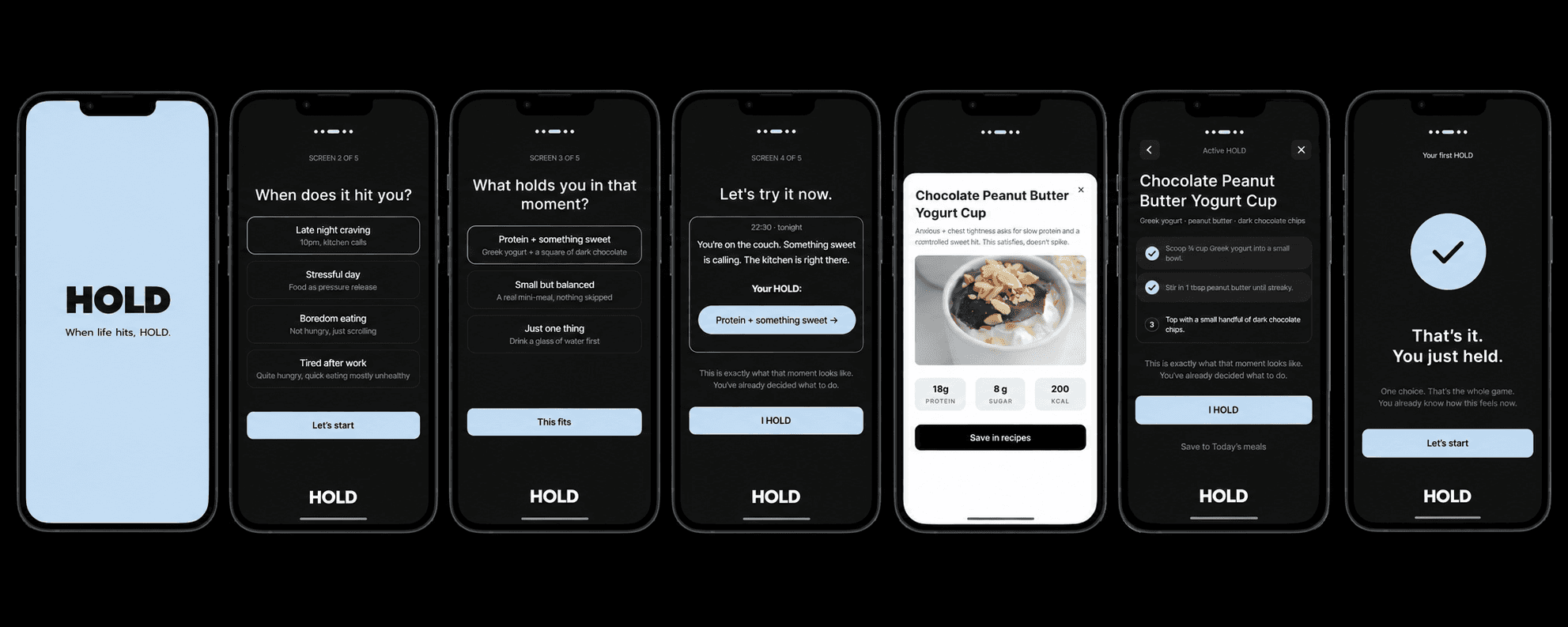
A mood-aware nutrition app exploring the gap between knowing what to eat and actually doing it. Currently in research phase, read the full retrospective on what didn't work the first time, and why I'm starting over.
00
research
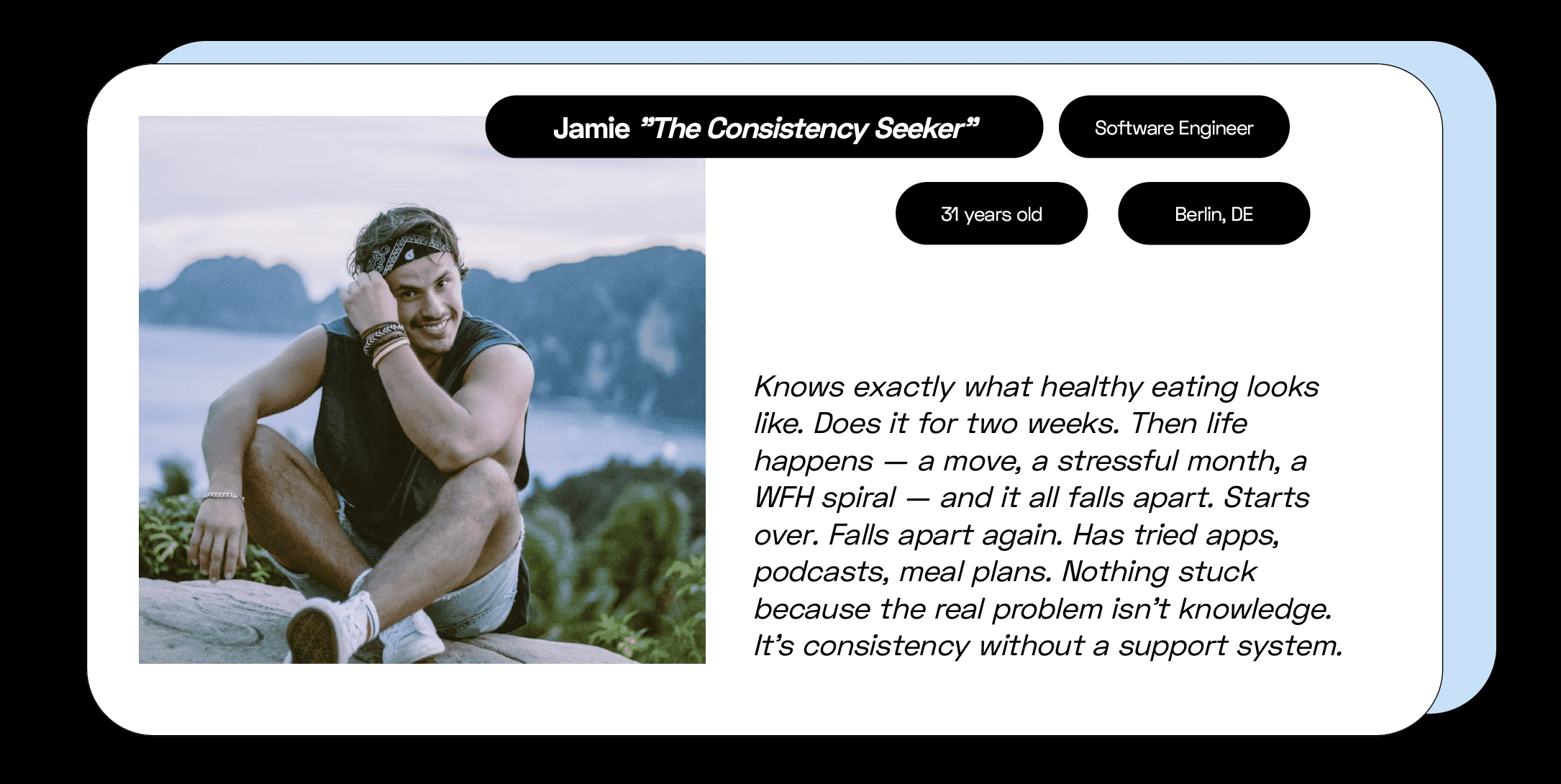
To understand emotional eating, I combined secondary research on the brain's reward system with primary research: two surveys (21 respondents combined) and five in-depth interviews with participants across different lifestyles and relationships with food. The interviews revealed a consistent pattern that secondary research alone hadn't fully captured, the gap wasn't in nutritional knowledge, but in what happens in the seconds before a decision is made.
To understand emotional eating, I combined secondary research on the brain's reward system with primary research: two surveys (21 respondents combined) and five in-depth interviews with participants across different lifestyles and relationships with food. The interviews revealed a consistent pattern that secondary research alone hadn't fully captured, the gap wasn't in nutritional knowledge, but in what happens in the seconds before a decision is made.
To understand emotional eating, I combined secondary research on the brain's reward system with primary research: two surveys (21 respondents combined) and five in-depth interviews with participants across different lifestyles and relationships with food. The interviews revealed a consistent pattern that secondary research alone hadn't fully captured, the gap wasn't in nutritional knowledge, but in what happens in the seconds before a decision is made.
key insights
Everyone already knows what to eat. Not one participant lacked nutritional awareness. The problem was never information, it was execution under pressure. Tracking apps fail for the same reason, every time. Every participant who had tried a nutrition or mood app described the same cycle: high initial engagement, declining use, abandonment, always triggered by friction during a hard moment. The real moment isn't the meal, it's the five minutes before it. Participants described reaching for food on autopilot, without registering the moment as a decision at all. This is where existing apps don't reach.
Everyone already knows what to eat. Not one participant lacked nutritional awareness. The problem was never information, it was execution under pressure. Tracking apps fail for the same reason, every time. Every participant who had tried a nutrition or mood app described the same cycle: high initial engagement, declining use, abandonment, always triggered by friction during a hard moment. The real moment isn't the meal, it's the five minutes before it. Participants described reaching for food on autopilot, without registering the moment as a decision at all. This is where existing apps don't reach.
Everyone already knows what to eat. Not one participant lacked nutritional awareness. The problem was never information, it was execution under pressure. Tracking apps fail for the same reason, every time. Every participant who had tried a nutrition or mood app described the same cycle: high initial engagement, declining use, abandonment, always triggered by friction during a hard moment. The real moment isn't the meal, it's the five minutes before it. Participants described reaching for food on autopilot, without registering the moment as a decision at all. This is where existing apps don't reach.
year
2026
timeframe
16 days
tools
Figma, Figjam
category
UI/UX
01
02

03

04
05

see also



.say hello
Let's talk. Whether it's a project, a question, or a collaboration, I'm always up for a good brief.
.say hello